
The Index of Layla Mu
Published on Wed Feb 18 2026 16:00:00 GMT-0800 (北美太平洋标准时间)
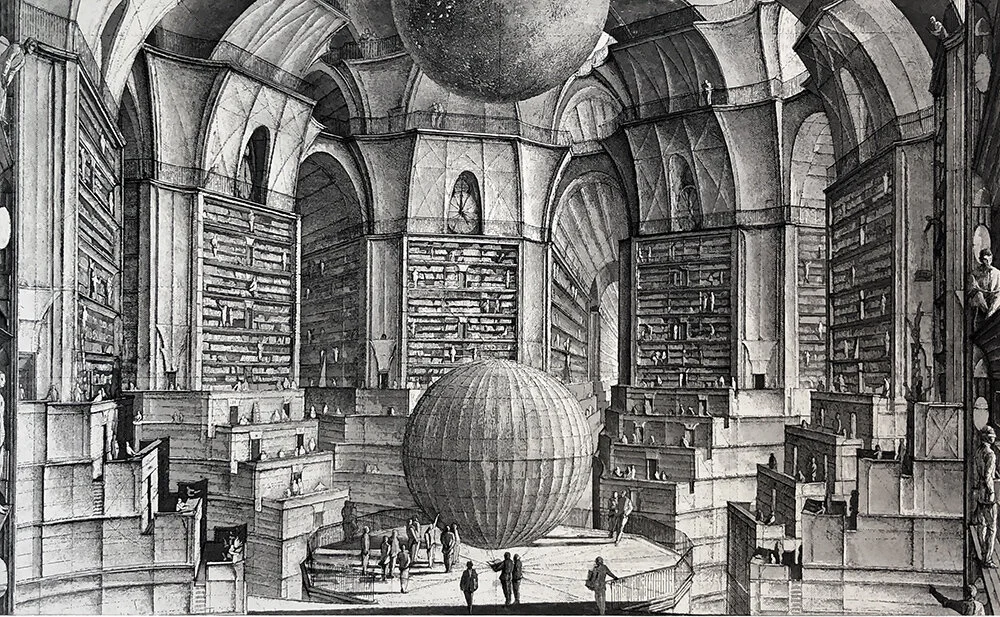
Illustration by Erik Desmazières
Layla Mu // 穆莱拉 // ليلى مُ
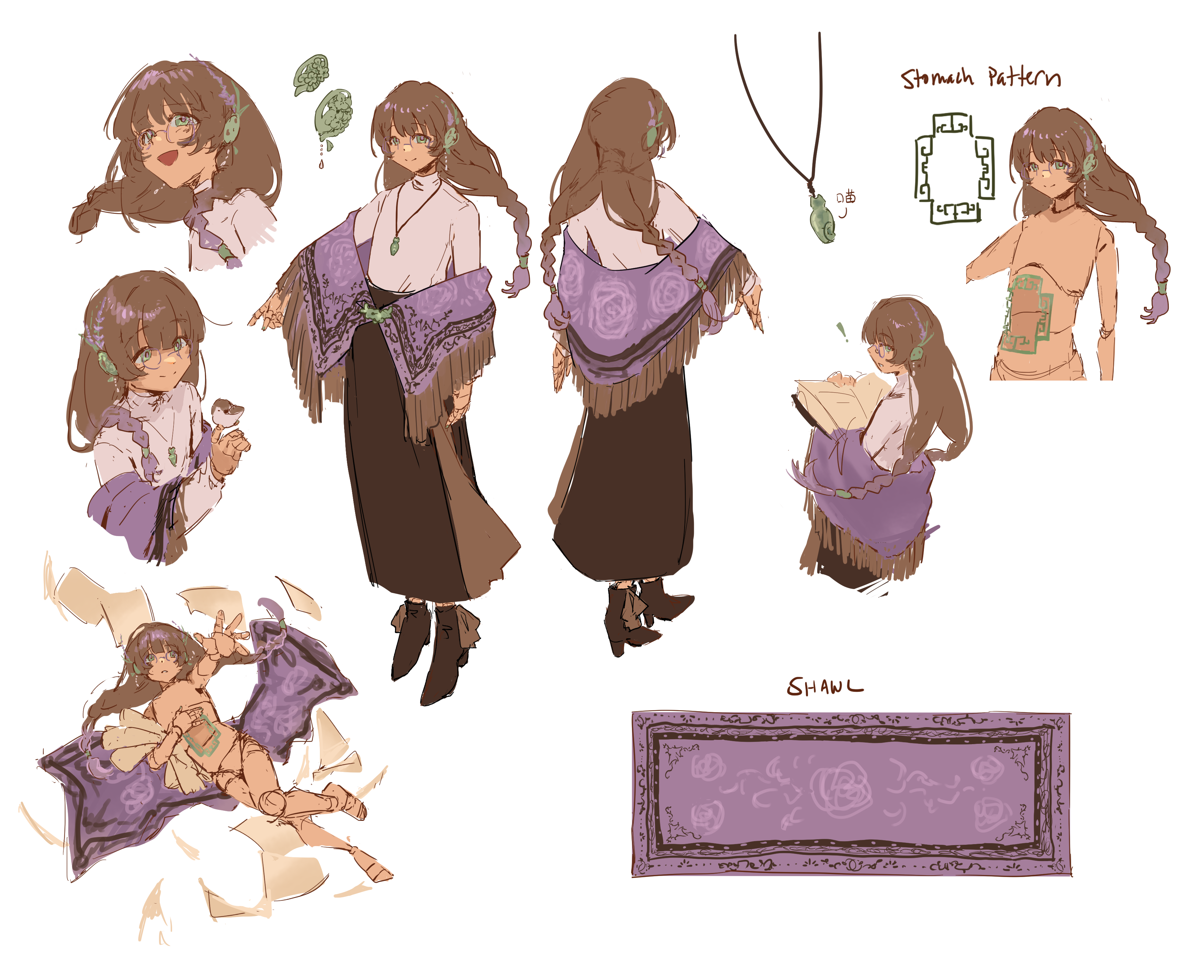
Layla Mu Design Sheet by 74
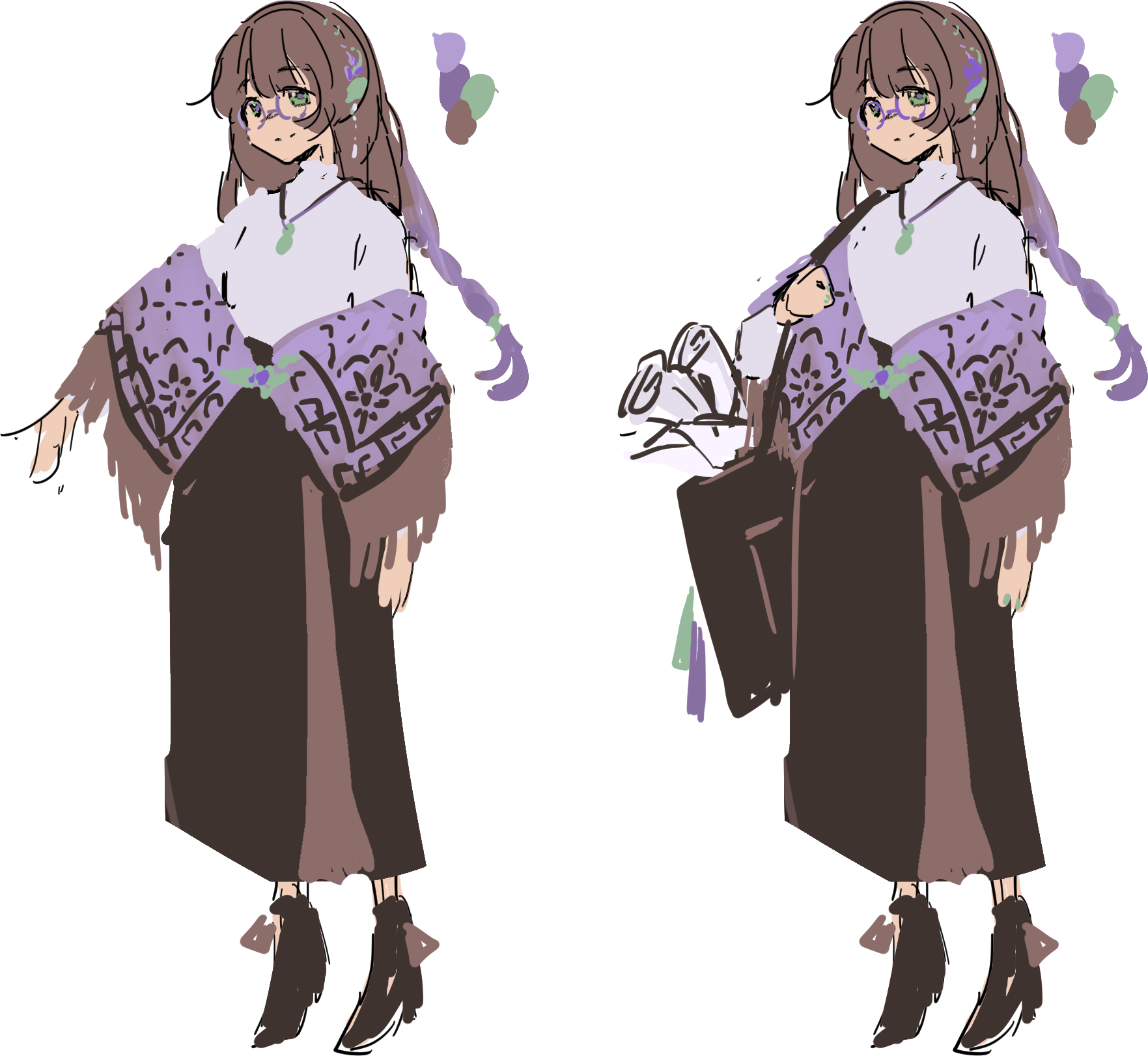
Early Iteration
A LETTER TO THE READER
Welcome to my library—herein you may find my ruminations on literature, language, art, and life. I’m Layla Mu, cybernetic girlthing, a bit obsessed with literature and memory. I write sometimes, both essays and fiction.
My interests include literature (obviously), world literature, including literature from Latin America & Asia (including the Middle East, South & Southeast Asia), specifically comparative literature, prose and composition, anthropology and ethnology, cinema, anime & animation, aesthetics and design, languages and lingustics, visual novels, science fiction, fine arts, art-orientalism, paraliterature, illustration, philosophy, music (especially classical), theatre, cybernetics, architecture, games, and more. I love teaching and working with others, especially artists, and introducing people to new things. I hope you enjoy your stay here!

REVERSION TO PAST STYLES, Hugh Ferriss 1922
Here are some of my favorites!— as a short introduction. Some of these I wouldn't recommend for newer readers of literature, but may be of interest to you regardless.
I am extremely fond of Vladimir Nabokov—his work is brilliantly constructed, detailed and considered, like some sort of abstract lexical architecture, especially apparent his late era works. My favorite novel is his Ada, or Ardor: a protean and metaphysical family chronicle which represents, to me, the substance of memory and living while broken—living with trauma and in circumstance. It is a sprawling work, metaphysical and speculative, taking place in an alternate, inverse reality, a world of rememberance, reckoning with Nabokov's experiences.
Another favorite of mine is Operation Wandering Soul by Richard Powers, in my opinion quite possibly the most overlooked novel in American literature: drawing on Powers's experience living in Bangkok as a child, Operation Wandering Soul follows the head of a pediatrics ward, tasked with treating, both the soma and the morale of the children under his care. These children are often left hopeless, with rare and chronic diseases, oft terminal, from missing faces to progreria, but nevertheless they continue living. To this end, the children often stage plays involving children's stories, mythologies, folklore from across history, an intertextual dialogue with the history of hardship faced by the most vulnerable of us. The novel further deals with themes of American imperialism and its lasting legacy on Southeast Asia, especially the children who grow up in the shadow of 20th century imperialism, but is also a celebration of the resilience of humanity in those who face hardship even before understanding what hardship is— As written by Deleuze & Guattari, "the child is a metaphysical being".
Another thing you should know about me— My personal hero is the legendary Scherazade from the frame story of the One Thousand and One Nights or the Arabian Nights Entertainment: I admire her kindness and wit, encyclopedic knowledge and above all her ability to heal. Scherazade to me, represents the power of storytelling to mend the broken heart, to blunt the hateful, to connect.
In Nikolai Rimsky-Korsakov’s suite Scheherazade, and adaptation of the Thousand and One Nights, Scheherazade is represented initially as a virtuosic flight of triplets, unaccompanied, in a shifted up higher register of solo violin. Bare, demanding, an emotive performance. It is technical, difficult, and lonesome, desolate, but also welcoming, warm, a tender voice. One can envision the young woman weaving the story, words acting as her thread, constructing fictional worlds through her voice. A harp is added: her storytelling lyre ornamenting her lyric. Following her performance, the entire orchestra swirls up as the fictional world becomes tangible, a welcoming world of magic and strangeness, love and loss, following her melody. I aspire to be like her.
I also deeply admire the 10th century Baghdad scholar Ibn Al-Nadim, who compiled a vast encyclopedia of the books throughout the Middle East and beyond, the Kitab Al-Fihrist, which can be approximated in English as The Book Index or The Book Catalogue. In the present day Terra, the Fihrist serves as the only record of many books lost to time—as well as having sections on regions as far as East Asia, alchemy and sciences, law, entertainment, both “high” poetry as well as erotic material and other curiosities such as Islamic Golden Age lesbian fictions many of which have been lost to time. Al-Nadim’s comprehensive eye and his desire to archive and index all the knowledge he could get his hands on deeply influences me.
As for more modern heroes of mine, I revere the work of Qian Zhongshu, a reclusive 20th century Chinese writer and scholar who was known for his extensive command of both Western and Eastern philosophical and artistic traditions as well as his deeply allusive language in both vernacular Chinese and the antiquated 文言文 Literary Chinese. His erudition was perhaps second to none and he worked in both literary criticism and fiction, his satirical, wordplay-filled Fortress Besieged being perhaps the most sublime work of 20th century Chinese fiction. The ability to seamlessly bridge the Orient and the Occident, especially in his ludicrously dense literary criticism work, I wish to achieve with my work.
Something connects us, even if you feel like you're the only person in the world. Maybe it's just the sadness we share, but maybe it's something else. Even if you're the last person left on earth. Even if you walk the empty streets, endless, like Wittgenstein's Mistress, and no one responds to your calls. I love you. Take care out there. — layla μ.